
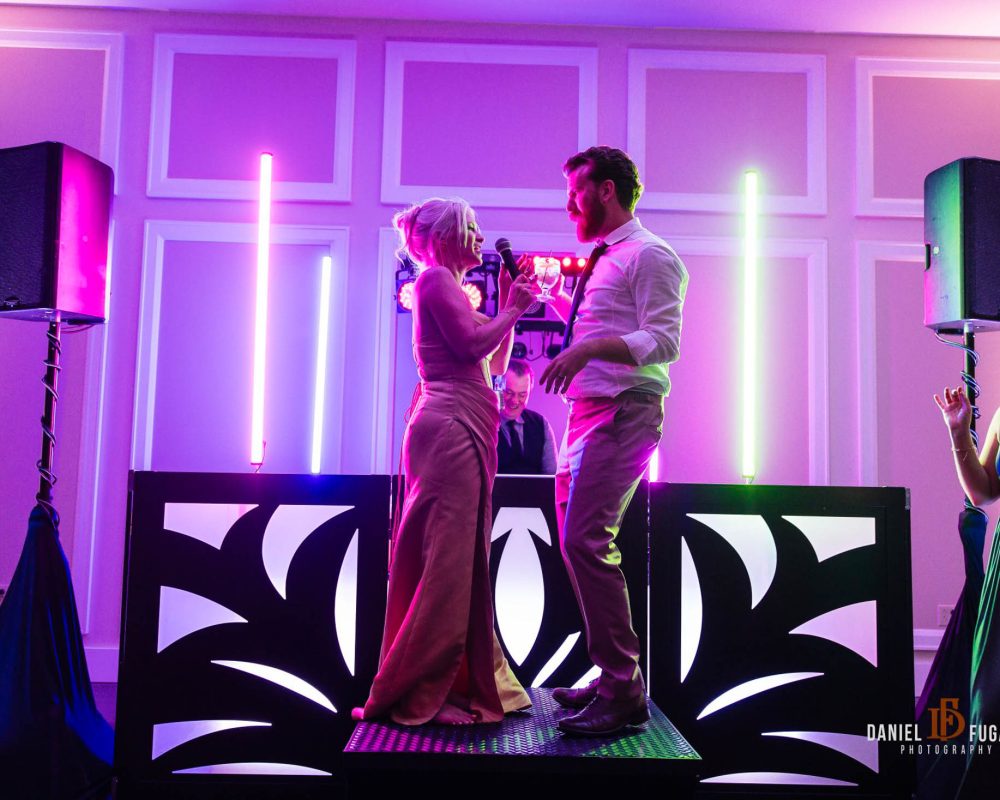
Lighting sets the tone in a ballroom before a guest hears the first song or sees the first floral arrangement. It shapes mood, guides attention, and decides how your design reads in photos. In March, lighting matters even more. Days start to stretch, yet evenings still arrive early enough for a true night atmosphere. You get a natural shift from day glow to evening glow, which gives you a chance to build a layered lighting plan that feels intentional from start to finish.
This guide explains what uplighting is for weddings, why it changes the look of a ballroom fast, and modern wedding lighting trends couples request more often. You will also learn how to plan lighting for key moments, then avoid mistakes that flatten décor or tint photos.
Why ballroom lighting changes the entire guest experience
A ballroom offers structure. It gives you defined walls, consistent ceiling height, and a clear layout for tables, dance floor, and focal points. Lighting turns that structure into a feeling. Warm light makes the room feel welcoming. Dimmer light makes the room feel intimate. Focused light tells guests where to look during toasts and first dances.
Lighting also affects comfort. Guests need enough brightness to move safely, find seats, and read place cards. At the same time, you want softness so faces look natural in photos and the room feels relaxed. When lighting misses that balance, the space feels flat or harsh, even with strong décor.
Ballroom features shape lighting results too. Tall ceilings and architectural details respond well to uplighting and accent lighting because the room has surfaces worth highlighting. If you want to picture how a larger ballroom layout supports lighting depth, explore Heroes Ballroom features for weddings and large evening events.
What is uplighting for weddings
Uplighting refers to fixtures placed low along the perimeter of a room, aimed upward at the walls. Uplighting adds depth by lifting the walls out of the background. It also frames the room, which helps your décor look cohesive from every angle.
Many people think uplighting equals bold color. Uplighting works with color, yet it also works with white tones. Warm white uplighting supports a candlelit feel. Neutral white uplighting supports a clean, modern feel. Soft blush or champagne tones support romantic palettes without overpowering the room.
Uplighting helps photos because it improves backgrounds. Walls stop reading as dark, empty space. Tables gain more separation from the perimeter. Your images look richer because the camera captures more depth behind guests and décor.
Where uplighting makes the biggest impact
Uplighting shows strongest results in rooms with visible wall space, tall ceilings, and features like columns or textured surfaces. Those surfaces reflect light in a way that adds dimension. A ballroom with multiple event areas also benefits from uplighting because you can define zones through light, even when décor stays minimal. For smaller gatherings where guests sit closer to the walls, lighting intensity matters even more. A more intimate option such as the MGL Room for smaller weddings and evening events often looks best with softer uplighting and clean accent lighting so the room feels polished, not overlit.
Lighting layers that make a ballroom look designed
Great lighting relies on layers. One type of light rarely solves everything. A layered plan gives you control over mood, photos, and pacing.
Ambient lighting
Ambient light sets the baseline brightness. In ballrooms, this often comes from ceiling fixtures and chandeliers. The goal is comfort and visibility, then gradual dimming as the evening moves into dinner and dancing.
Accent lighting
Accent lighting includes uplighting and pin spot lighting. Pin spots place focused beams on centerpieces, cake tables, escort displays, and key décor moments. This keeps details visible once the room dims, and it protects décor investments in photos.
Feature lighting
Feature lighting directs attention during speeches, first dances, and spotlight moments. A focused light on the couple or speaker keeps faces clear in photos and video, without raising brightness across the entire room.
If you want a practical overview of how these layers work together during a reception, review wedding reception lighting basics for planning the full room.
Modern wedding lighting trends shaping receptions right now
Modern wedding lighting trends focus on clean visuals, photo friendly warmth, and smooth transitions between moments. Couples want lighting that looks intentional in person and consistent on camera.
Warm neutrals over heavy color
Many couples choose warm white or champagne uplighting instead of saturated colors. This approach keeps skin tones accurate and lets florals and linens carry the palette. It also ages well in photos because it avoids trend heavy color casts.
Wireless uplighting for cleaner walls
Wireless LED uplights reduce visible cords along walls. The perimeter looks cleaner, aisles stay safer, and fixtures place more easily around columns and corners. This trend also supports faster room transitions, which matters when a space shifts from ceremony to reception.
Pin spotting as a standard, not an upgrade
Tablescapes often include glass, metallic accents, and layered florals. Pin spotting pulls those details forward once ambient light drops. Photos look sharper because centerpieces retain contrast and highlight.
Minimal monograms and crisp projections
Monograms remain popular, yet modern versions feel restrained. Couples choose one placement, often behind the sweetheart table or on a feature wall, with clean typography and clear edges. The projection becomes a design moment, not visual noise.
Dance lighting that flatters guests
Dance floor lighting trends lean toward movement without harsh strobing. Guests still want energy, yet they also want photos where faces look good. A balanced approach uses soft color shifts and controlled motion.
For visual examples of these modern directions across different styles and budgets, review wedding lighting ideas with modern reception examples.
Why March timing makes lighting feel even more dramatic
March often brings a natural transition during event hours. Early arrivals may happen with daylight still present. Then the room shifts into full evening. Lighting design shines during that shift because it gives the room a clear progression.
Start with a brighter, warm baseline for arrivals and cocktail hour. This supports greetings, food visibility, and early photos. As daylight fades, dim ambient light slightly and let uplighting add depth around the walls. For dinner, keep the room soft and warm, then rely on accent lighting to preserve décor detail. After formal moments, shift lighting again for dancing, with a stronger emphasis on movement and energy.
March also supports a seasonal feel without heavy themed décor. Warm light, layered candles, and subtle uplighting create an early spring glow that feels refined and current.
How to choose uplighting colors without photo problems
Start with the palette and the surfaces in the room. Wall tone changes how color reads. A warm wall makes colors feel warmer. A cooler wall makes blues and greens look sharper.
For timeless weddings, warm white uplighting often delivers the safest photo results. For modern weddings, neutral white uplighting paired with pin spots gives a clean, editorial look. If you want color, choose softer tones and keep intensity lower. This reduces color spill onto faces and white dresses.
Think of uplighting as framing. Let it outline the room and support the vibe, then keep face lighting warm and consistent through ambient and feature lighting.
Common lighting mistakes that reduce impact
One mistake shows up often: relying on uplighting alone. Uplighting changes walls, yet it does not light faces for toasts and first dances. A layered plan solves this with ambient dimming, accent lighting, and focused feature lighting.
Another mistake involves color selection without testing. A color that looks perfect on a mood board may tint the room in unexpected ways. Testing one or two tones in the space prevents surprises.
A third mistake: dimming too early. Guests still need visibility during dinner service. Keep the room readable, then dim further after plates clear and formal moments end.
A final mistake: skipping pin spots for details. Cakes, escort displays, and centerpieces often disappear in dim rooms. Pin spots keep those elements visible and photo ready.
Lighting transforms a ballroom by shaping mood, focus, and photos
Lighting does more than decorate a room. It controls how guests feel, where they look, and how the night photographs. Uplighting frames the ballroom and adds depth. Modern wedding lighting trends lean toward warm neutrals, cleaner perimeters, sharper detail lighting, and controlled energy on the dance floor. In March, lighting planning matters because the day to night transition often happens during your event. When you plan for that shift, the ballroom looks intentional at every stage of the night.